

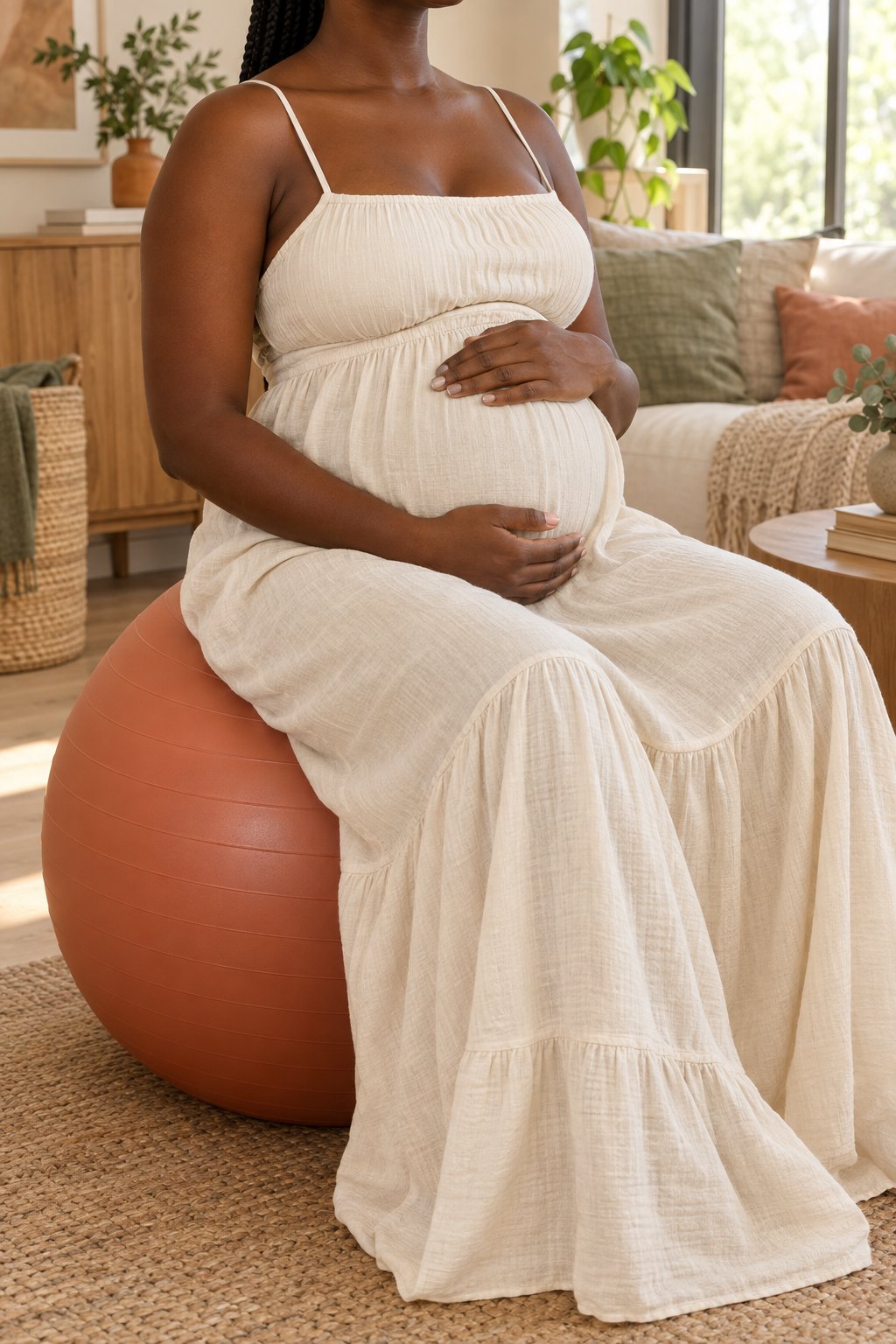
Your body was designed to move in labor. Changing positions can ease pain, help your baby find their way down, and give you a sense of control.
Early labor
- Walking and slow dancing. Lean on your partner and sway.
- Birth ball rocking. Sit with knees wide and gently circle your hips.
- Rest on your side. Use a peanut ball or pillow between your knees.
Active labor
- Hands and knees. Takes pressure off your back. Great with counter-pressure.
- Leaning forward over a counter, bed, or birth ball.
- Rebozo sifting. A woven scarf gently lifts and rocks the belly to relax the muscles.
- Supported squat. Holding your partner's arms or a birth bar opens the pelvis.
Pushing
- Squatting with support
- Side-lying, which can help slow a fast birth and protect the perineum
- Kneeling upright or leaning into your partner
- Hands and knees in or out of the water
Catrice's Take
“There is no one right position. Follow what your body asks for, and I will help you notice what is working.”
How partners can help
- Offer counter-pressure on the lower back
- Hold space for a supported squat
- Bring water between contractions
- Remind her to change positions every 30 to 60 minutes
When to check with your midwife
Some positions may not be right for every situation, such as certain blood pressure concerns or a baby in a less common position. Your midwife will guide you.
Learn these in person. Ask about our childbirth education classes.
This content is for general education and is not a substitute for individualized medical care. Always talk with your midwife or health care provider about your situation. If you are experiencing an emergency, call 911.
Questions about your own care?
Catrice offers free consultations for Houston-area families planning a home birth or looking for prenatal and postpartum support.
Book a Free Consultation